Showing posts with label Foundation For Molecular Medicine. Show all posts

Sunday, June 9, 2013

Extraordinary Offering v. 4

Extraordinary Offering 

The inspiring stories of volunteerism with the Foundation For Molecular Medicine


This is a series of stories from the volunteers at the Foundation For Molecular Medicine, who offer the extraordinary gift of themselves to the mission of the organization. The stories reflect the diversity of personal experiences each volunteer brings to the organization along with their motivation and desire to improve the lives of others. 

Volunteerism truly is the Extraordinary Offering.


My Story – For Family and Friends
By: Tom Szczepanski


The opportunity to simply give of one’s time to charitable organizations, by walking or donating financially is so very important and can’t be overlooked.  Having lost two family members and a cousin to cancer it was a very easy decision to give my time to volunteer for the Foundation For Molecular Medicine.  It was with my sister in law Carol’s passing that I felt I really had to step up to the plate and do something more.

It is particularly tough to watch people suffer, especially the ones you love.  Carol was a true fighter against breast cancer, fighting against this dreaded disease for 20+ years.  That whole time, I never understood why technology wasn’t able to help keep her cancer in check. While Carol struggled and fought to beat cancer, she was also very caring and giving, even during the rough times. It is in the memory of her spirit of giving to others, to fight and beat cancer that the Foundation For Molecular Medicine exists.

My Dad is one of the reasons I chose to become a volunteer for the Foundation For Molecular Medicine. He gave so much of his time to charitable organizations in the community, he firmly believed in giving back to the community. He lost his life in his early 80’s to cancer and while it is always tough to lose a parent, he has been an inspiration to me to give my time and energy by volunteering with charitable.

The Foundation For Molecular Medicine seeks to educate individuals on various issues from healthy living to the nontoxic diagnostics and therapies that are available. There are others that have lost their lives to cancer like Carol and my Dad, and to those who are currently fighting the disease we at the Foundation For Molecular Medicine are here to help make a difference.

The mission of the Foundation For Molecular Medicine is to support education on early detection of metastatic cancers, neurodegenerative diseases and promoting healthy lifestyles. Please check our web site at www.FFMM.org for further information.

Carol Szczepanski - my sister in law

Sunday, May 26, 2013

Extraordinary Offering v. 2


Extraordinary Offering 

The inspiring stories of volunteerism with the Foundation For Molecular Medicine


This is a series of stories from the volunteers at the Foundation For Molecular Medicine, who offer the extraordinary gift of themselves to the mission of the organization. The stories reflect the diversity of personal experiences each volunteer brings to the organization along with their motivation and desire to improve the lives of others. 

Volunteerism truly is the Extraordinary Offering.


My Sister Ellyn - Why I Volunteer For the Foundation For Molecular Medicine
By: Susan Barriball        


In January of 2009 I was driving to Kentucky for a new assignment as an EHS trainer. My phone rang and I pulled safely to the shoulder because my youngest sister, Janet’s phone number appeared on caller ID. I was the 2nd oldest sister in a family of 5 sisters, Janet (the sister that was calling) was the youngest and Ellyn was the next to the youngest sister. When I answered the phone, I heard Janet crying and I couldn’t understand what she was saying. I asked her if someone else was there with her and to please put that person on the phone. Frank, my sister Ellyn’s husband, took the phone and told me what Janet wasn’t able to say.

Frank said that Ellyn had a grand mal seizure and that the doctor believed that Ellyn had a brain tumor spanning the entire top of her head, from ear to ear, and that her prognosis was 3-6 months to live.  After talking with Frank, I immediately proceeded to call a neurosurgeon that I knew in Chicago. This call resulted with me giving Frank the surgeon’s cell phone number so they could discuss Ellyn’s case. After that, I got back on the road driving towards home: and so began the cancer diagnosis that changed our family forever.

My sister Ellyn was diagnosed with glioblastoma multiforme, a primary cancer with a very bad survival rate of 15 months to 5 years at the most.  At the time, a glimmer of hope for me was that Senator Ted Kennedy was diagnosed with the exact same type of cancer; I thought if Kennedy had it then someone must be working towards a cure for this brain cancer.

After her diagnosis, Ellyn sought experimental treatment in Chicago. Each day Ellyn was blessed to be here with us, our family thought there might be enough time for research to develop a cure. We thought that if she could stay well with these experimental treatments, it was one more day that research teams might find the way to stop glioblastoma multiforme.

During this time, we made many trips to the Chicago hospital to meet the helicopter that transported Ellyn. We watched her have small seizures, brain bleeds, and a score of other physical complications that started six months before she passed. The emotional effects on Ellyn were even worse to watch than the physical. Her emotional struggle pulled on the hearts of our whole family while we tried to cope and come to terms with what surely was the hardest circumstance we would experience. Watching Ellyn slowly succumb to the emotional and physical hardship of cancer, made us all much more aware of what needs accomplished to stop cancer for all people, for all families.

Ellyn “Ellie” passed June 21, 2012 leaving behind a beloved husband, daughters, grandchildren and of course her four sisters and mother who miss her every day. The experimental treatments she received gave her  3.5 more years than expected at her diagnosis; and looking back 3.5 years was much better than the original 3-6 month prognosis, for her and for all of us. The experimental treatments that gave Ellyn 3.5 years more than expected were only possible through funding donated to cancer research.

Each discovery made through research is a step closer to understanding and treating glioblastoma multiforme and research is only possible with funding. Lives are extended and saved through funding for research.  Senator Kennedy who had the best possible medical care available at the time, passed away just the same - without a cure. Funding is desperately needed so that beautiful people like my sister Ellyn, who passed at the very young age of 56, are given better treatment for better prognosis to live a long, full life. 

I miss Ellyn every single day, her smile and her easy style - and her birthday. My family recently gathered and a discussion occurred about our family birthdays. My birthday is the first in April and three of my sister’s birthdays are in May. The discussion ended somberly with the statement “and Ellyn’s birthday is in November”. This was a very difficult thought to express since there are only four of us sisters here to celebrate our birthdays; one of us is missing. While Ellyn is not with us anymore to celebrate birthdays, she lives on in each one of our hearts.

I volunteer for organizations that raise and use funds for cancer research and the process of cancer recovery and I will continue to volunteer for organizations that support a cure. The memory of my sister Ellyn is why I volunteer at the Foundation for Molecular Medicine.

I celebrate Ellyn by volunteering and praying for a cure.       


My sister Ellyn

Sunday, May 19, 2013

Extraordinary Offering v.1


Extraordinary Offering 

The inspiring stories of volunteerism with the Foundation For Molecular Medicine


This is a series of stories from the volunteers at the Foundation For Molecular Medicine, who offer the extraordinary gift of themselves to the mission of the organization. The stories reflect the diversity of personal experiences each volunteer brings to the organization along with their motivation and desire to improve the lives of others. 

Volunteerism truly is the Extraordinary Offering.


My Story – Why I created the Foundation For Molecular Medicine
By: Frank Szczepanski


During 2011, my wife Carol was well into her third occurrence of metastatic breast cancer.  She was undergoing treatment at UChicago with a relatively mild form of chemotherapy that was administered 2-3 times a month.  I took her there for every IV Therapy and observed other patients in the waiting area – often 20-30 patients each visit. Usually they were not the same people, but their faces read the same: that look of suffering, or resignation for what they were about to experience.

You see, each time a patient’s name is called, then they need to have their vitals and blood pressure taken along with a blood sample which means a needle stick.  They then go back to wait for the laboratory to process their blood and produce a CBC (comprehensive blood count) report.   If satisfactory, their chemo will be prepared by the in-house pharmacy and then, the slow-drip of toxic chemicals takes place in one of the beds in the IV Therapy room. 

Each patient experiences the pain, the anxiousness, and subsequent side effects of today’s modern medical method for “curing” cancer.  The paradigm for diagnosis and treatment has not radically changed in over 25-50 years.

Knowing that my biotech company, IVDiagnostics, had developed a way to monitor Circulating Tumor Cells (CTCs) I wanted so badly to let each of patients (especially my wife) to have their oncologists monitor the root cause of metastatic disease, i.e. CTCs and
not just look at CBC counts and images from CT, PET or Bone Scans that can only detect solid tumors.  Patients need to know what is happening at the cell and molecular level inside their bodies; otherwise the oncologists have no true way of knowing if the patient is in remission, or if the treatment being prescribed is really working.

So we began the journey of Educating people on the need for Early Detection and Remediation of cancer as well as how to use healthy diet, exercise, lifestyles to prevent the onset of cancer.  Molecular analysis of captured CTCs is also available with today’s technology as we have proven in our laboratory – but patient’s need to know how and why this can be done much earlier than waiting for a solid tumor to appear.

My wife was a victim of 20 years of living with metastatic disease.  The treatment during 2011 seemed to work and her doctors declared that she was in remission.  Unfortunately in 2012, she suffered her fourth occurrence and her cancer had spread once again – this time to her abdomen and then to her lungs.  She passed, but her spirit lives on through the work of the Foundation For Molecular Medicine.


Carol Szczepanski
    
Carol Szczepanski was chosen as November’s Calendar Girl by the Pink Ribbon Society in 2011.  She was the strongest woman I ever knew. A true fighter who survived 20+ years of living with metastatic breast cancer.

Tuesday, May 14, 2013

5 Worst Gluten Free Mistakes

Shared from Health magazine. The original article is available at: http://news.health.com/2013/05/08/5-worst-gluten-free-mistakes/


By: Cynthia Sass


After experiencing some wacky symptoms, I was recently tested for celiac disease, and while the report came back negative, I’ve noticed that I do feel better when I avoid gluten. Many of my clients are in the same boat, but others seek me out after going gluten free and feeling worse, or even gaining weight, which seems to be increasingly common. The truth is, navigating the gluten-free landscape can be pretty darn tricky. Here are five common missteps I see, and how to resolve them.

Not “getting” gluten
One client recently said to me, “I’m not really sure what gluten is, but I know it’s bad, right?” I think a lot of people are a little in the dark about the issue at large, and it is complicated, but in a nutshell, here’s what you need to know: gluten is a type of protein naturally found in wheat (including spelt, kamut, farro, and bulgur) and other grains, like barley and rye. In people who have celiac disease, consuming even small amounts of gluten triggers unwelcome symptoms, including belly pain and bloating. This happens because gluten causes the immune system to damage or destroy villi, the tiny, fingerlike structures that line the small intestine like a microscopic plush carpet. Healthy villi absorb nutrients through the intestinal wall into the bloodstream, so when they become damaged, chronic malnutrition occurs, which is typically accompanied by weight loss and exhaustion. Other symptoms may include bone or joint pain, depression, and skin problems. In people with this diagnosis, the only way to reverse the damage, and the accompanying symptoms, is to completely avoid gluten. People like me, who test negative for celiac disease, may be experiencing a condition called gluten intolerance, or gluten sensitivity, which means that while not celiac, consuming gluten causes bothersome side effects, which can include flu-like feelings, bloating, and other gastrointestinal problems, mental fogginess, and fatigue. Unfortunately, there is no real test for gluten sensitivity at this time, and the symptoms may be related to other issues, including stress (who doesn’t have that?!), which makes it a not-so-black-and-white issue.

Confusing gluten free with wheat free or refined grains
As I noted above, gluten isn’t only found in wheat. I’ve heard numerous people say they eat gluten free, but all they’ve really done is replace foods like white bread with hearty whole grain versions, which may include spelt (in the wheat family), and rye (which, while not wheat, also contains gluten). If you don’t have celiac disease or gluten intolerance, these swaps may make you feel great, and lead to weight loss, because trading refined grains for whole grains ups your intake of fiber, boosts satiety, so you feel fuller longer, and better regulates blood sugar and insulin levels. These are all good things, but, in this case, totally unrelated to gluten.

Thinking gluten free equals weight loss
You may have seen a friend, co-worker, or celebrity suddenly slim down after proclaiming to give up gluten. And while going gluten free may absolutely lead to dropping a dress size (or more), the weight loss is generally caused by giving up foods that contain gluten, which are loaded with dense amounts of refined carbs, like bagels, pasta, crackers, pretzels, and baked goods. Axing these foods altogether, or replaced them with more veggies and healthy gluten-free whole grains, like quinoa and wild rice, automatically cuts excess carbs (which may have been feeding fat cells), ups fiber and nutrients, and results in soaring energy. However, going gluten free can also lead to weight gain.

Loading up on gluten-free junk food
Because gluten free has exploded in popularity, there are dozens of gluten-free options in markets these days, including carb-laden (but gluten free) versions of… bagels, pasta, crackers, pretzels, and baked goods! One popular brand of gluten free cookies pack 60 calories each, more than a “regular” sandwich cookie. And some gluten-free foods are made with refined gluten-free grains, which have been stripped of their fiber and nutrients, like white rice. The bottom line is, simply going gluten free doesn’t guarantee the loss of pounds and inches – quality and quantity still matter most.

Ignoring the rest of your diet
In addition to quality and quantity, balance is critical for feeling well and achieving weight loss. I’ve seen people trade white pasta for healthy whole grains like quinoa or wild rice, but still eat portions that are far too large, and therefore not see weight loss results. Others believe it’s OK to eat unlimited amounts of healthy gluten-free foods, like fruit and nuts. But sadly, any time you eat more than your body can use or burn, even from healthy foods, you create surpluses, which get shuttled straight to your body’s storage units – fat cells.

If you have celiac disease (get tested if you suspect you do, but you’re not sure), you absolutely must avoid gluten, and it’s important to note that it lurks in many products, from salad dressings and seasoning mixes, to vitamins, and even lip balm, so eliminating it completely is a big commitment. And if you think you may be gluten intolerant, try to avoid gluten, and monitor your how you feel. But in either case, the single most important thing you can do is to strive for a healthy, balanced, whole foods diet, the true keys to both optimal health and weight loss.

What’s your take on this topic? Are you confused about gluten free diets? Have you lost or gained weight by going gluten free? Please tweet your thoughts to @CynthiaSass and @goodhealth

Cynthia Sass is a registered dietitian with master’s degrees in both nutrition science and public health. Frequently seen on national TV, she’s Health’s contributing nutrition editor, and privately counsels clients in New York, Los Angeles, and long distance. Her latest New York Times best seller is S.A.S.S! Yourself Slim: Conquer Cravings, Drop Pounds and Lose Inches. Connect with Cynthia on Facebook, Twitter and Pinterest.

Sunday, May 5, 2013

Ahi Poke Salad Recipe

Ahi Poke Salad Recipe


Ingredients:

  • 1 1/4 pound ahi tuna, cut into 1/2 inch cubes
  • 1/4 cup minced onion
  • 1/4 cup minced green onion
  • 1 teaspoon minced fresh ginger
  • 2 tablespoons lightly crumbled wakame seaweed
  • 1 tablespoon ground roasted macadamia nuts
  • 2 teaspoons sesame oil
  • 1 1/2 teaspoons crushed red pepper flakes
  • 8 leaves iceberg lettuce
  • 2 tablespoons cilantro leaves, for garnish
Directions:

Mix together the ahi tuna, minced onion, green onion, ginger, seaweed, macadamia nuts, sesame oil, and red pepper in a mixing bowl. Cover and refrigerate at least one hour, for the flavors to come together. Arrange the lettuce leaves on a serving platter, spoon the ahi poke on top, and garnish with the cilantro.


Credits to: www.allrecipes.com
LIKE US ON FACEBOOK!!

Thursday, April 4, 2013

Oven Baked Fajitas


Oven Baked Fajitas


Ingredients:

1 pound boneless, skinless chicken breasts, cut into strips
2 Tbsp vegetable oil
2 tsp chili powder
1 1/2 tsp cumin
1/2 tsp garlic powder
1/2 tsp dried oregano
1/4 tsp seasoned salt
1 (15 oz) can diced tomatoes with green chilies (Rotel)
1 medium onion, sliced
1/2 red bell pepper, cut into strips
1/2 green bell pepper, cut into strips

Directions:

Preheat the oven to 400 degrees. Place chicken strips in a greased 13×9 baking dish.
In a small bowl combine the oil, chili powder, cumin, garlic powder, dried oregano, and salt.
Drizzle the spice mixture over the chicken and stir to coat.
Next add the tomatoes, peppers, and onions to the dish and stir to combine.
Bake uncovered for 20-25 minutes or until chicken is cooked through and the vegetables are tender.


Credit to: Losin’ fat Diva to Skinny Diva, Weight loss to healthy and getting fit.

LIKE US ON FACEBOOK!

Myth #2: Brown Eggs Are Healthier


Myth #2: Brown Eggs Are Healthier


 Truth: When it comes to eggs, the color on the outside has nothing to do with the nutrition on the inside. The nutrients found in brown and white eggs are essentially the same, however, brown eggs often cost more. “Regular brown eggs are not worth the higher price tag,” says registered dietitian Victoria Shanta Retelny, author of "The Essential Guide to Healthy Healing Foods". Retelny says if you’re looking to boost the nutrient content of your eggs, choose brands whose packages say they’re rich in omega-3 fats (the hens' feed is rich in these essential fatty acids); they cost a bit more as well, but in this case, you’re actually getting what you’re paying for.


Credit to: www.iVillage.com

LIKE OUR FACEBOOK PAGE!

Tuesday, April 2, 2013

Myth #1 Related to Healthy Food


Myth #1: Two-Percent Milk Is Much Lower In Fat than Whole


Truth: The labeling of milk makes this one a common mistake. While 2% milk sounds like it would be much lower in fat than whole milk, in reality whole milk contains roughly 3 percent fat, not much of a difference. “A low-fat food is defined by having 3 grams of fat or less per serving and 2% milk has 4.9 grams of fat per serving,” says registered dietitian Keri Gans, author of "The Small Change Diet". She recommends opting for nonfat milk.


Credit to: www. iVillage.com

LIKE US ON FACEBOOK! 

Saturday, March 30, 2013

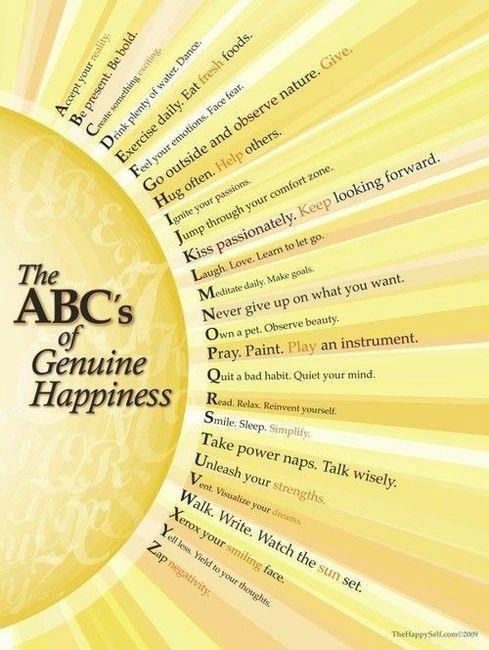
ABC's Of Happiness

Balancing many intentions and actions at once

As with most mornings, I wake and look to daily inspirations, meditations, affirmations, and prayer to start the day. I found this one today and thought others would appreciate it as well. 

Have a Happy Life!


Wednesday, March 27, 2013

SMART WAYS TO EAT YOUR VEGGIES

Optional ways to eat veggies


Eating at least some vegetables raw ensures you are digesting beneficial enzymes and water-soluble vitamins(C and the B's)


  • Boil oxalate-rich veggies (spinach, Swiss chard, beets) if you are prone to forming calcium kidney stones since most of the oxalates release into the cooking water.
  •  If you have a condition such as irritable bowel or Crohn's disease, steaming can make veggies easier to digest. Steaming also increases antioxidant activity in bell peppers, green beans, broccoli, and spinach and makes beta-carotene in carrots easier to absorb. 
  • Roasting meats and vegetables is a safer alternative to grilling, which can char foods, resulting in carcinogens called heterocyclic amines (HCAs) and advanced glycation end products (AGEs), toxins created when foods containing sugars and protein are burned (that goes for baked goods too).


Eat smart each day!